
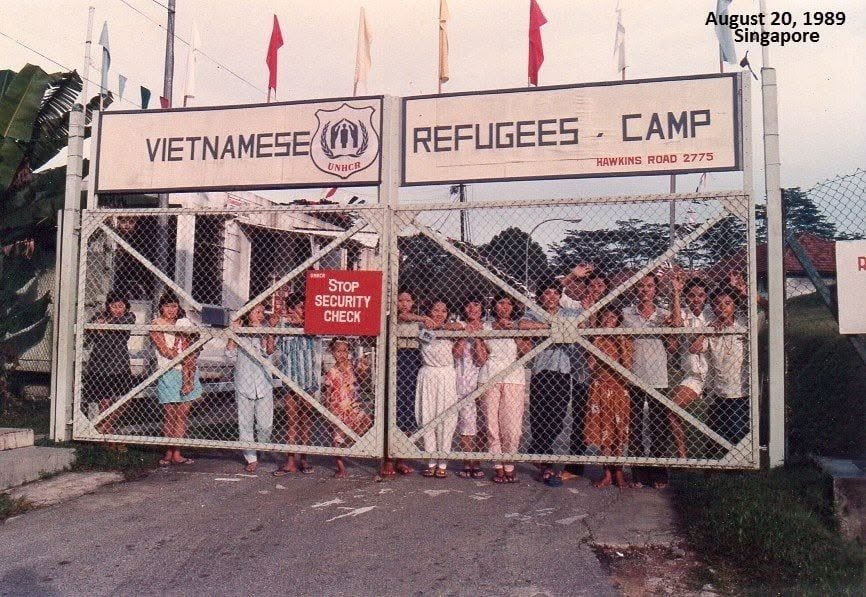
Hawkins Road Camp: Many stories originated from this era.
On 2 May 1975, MINDEF issued an alert regarding the arrival of Vietnam War refugees in Singapore waters. In response, SAF Maritime Command, SADC, 3rd Singapore Infantry Brigade, and the Marine Police activated Operation Thunderstorm. Two weeks prior, all participating units had been briefed on the operation and instructed to adhere strictly to SOPs.
At the time, I served as the Signal Detachment IC on Brigade Standby.
The two weeks following activation were extremely hectic. We were authorized to draw signal personnel from any battalion to maintain robust communications between the Army and Maritime Command. Five Signals NCOs, including myself, were assigned to handle Maritime Command voice procedures, which differed significantly from standard Army protocols.
My standby unit was responsible for manning the main board at the Communications Centre to log and identify incoming Vietnamese boats, ships, and other vessels. Additionally, I had to attach radio operators to Commando and Marine Police teams for all boarding operations.
Key Objectives:
-
Identify each vessel.
-
Perform a head count.
-
Determine if any individuals were armed.
-
Identify the ship master or designated leader.
-
Obtain vessel radio frequencies and establish contact via the Refugee Radio Net.
-
Determine their intended destination and motives in Singapore waters.
-
Assess their immediate supply and medical needs.
-
Coordinate with the Beach Command Centre to deploy a resident signaller alongside Commando and Marine Police boarding teams.
Because this was the SAF’s first humanitarian relief mission, it presented an unprecedented challenge. Despite the initial briefings, ground-level execution was complex. At one point, my Commanding Officer, Colonel John Morris, was openly admonished by Dr. Goh Keng Swee for failing to provide clear procedural guidance to the units on the ground.
The sheer volume of coordination was overwhelming, including:
-
Repairing damaged boats and ships.
-
Distributing food and essential supplies to refugees.
-
Maintaining order and suppressing belligerent groups onboard, including ex-gangsters and former ARVN Marines.
-
Deterring foreign journalists from approaching the operational areas.
-
Escorting designated refugee representatives to and from vessels for emergency matters, currency exchange, and official discussions with Singapore government officials.